New smart windows make buildings more energy-efficient
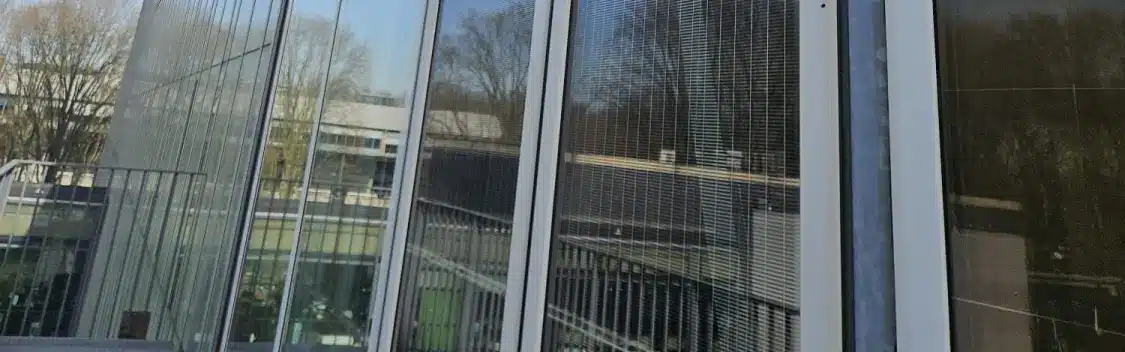
At Group Ceyssens, we are fully committed to innovation to make buildings more sustainable and energy-efficient. Together with researchers from UHasselt, imec, and the Dutch TNO, we are developing a new dynamic glazing that automatically adapts to the seasons. Thanks to a thermochromic pigment, the
At Group Ceyssens, we are fully committed to innovation to make buildings more sustainable and energy-efficient. Together with researchers from UHasselt, imec, and the Dutch TNO, we are developing a new dynamic glazing that automatically adapts to the seasons. Thanks to a thermochromic pigment, the windows adapt to seasonal changes, providing thermal insulation in winter and blocking solar heat in summer. This reduces the need for cooling and heating, thereby lowering energy consumption.
Smart windows
Buildings are responsible for approximately one-third of global annual energy consumption and associated CO2 emissions. Due to rising temperatures and increasing heat stress, energy consumption is expected to rise significantly, particularly in regions such as Belgium and the Netherlands, due to the growing use of air conditioning. The Belgian-Dutch Interreg research project U-SAVE aims to address these challenges by developing and demonstrating dynamic glazing.
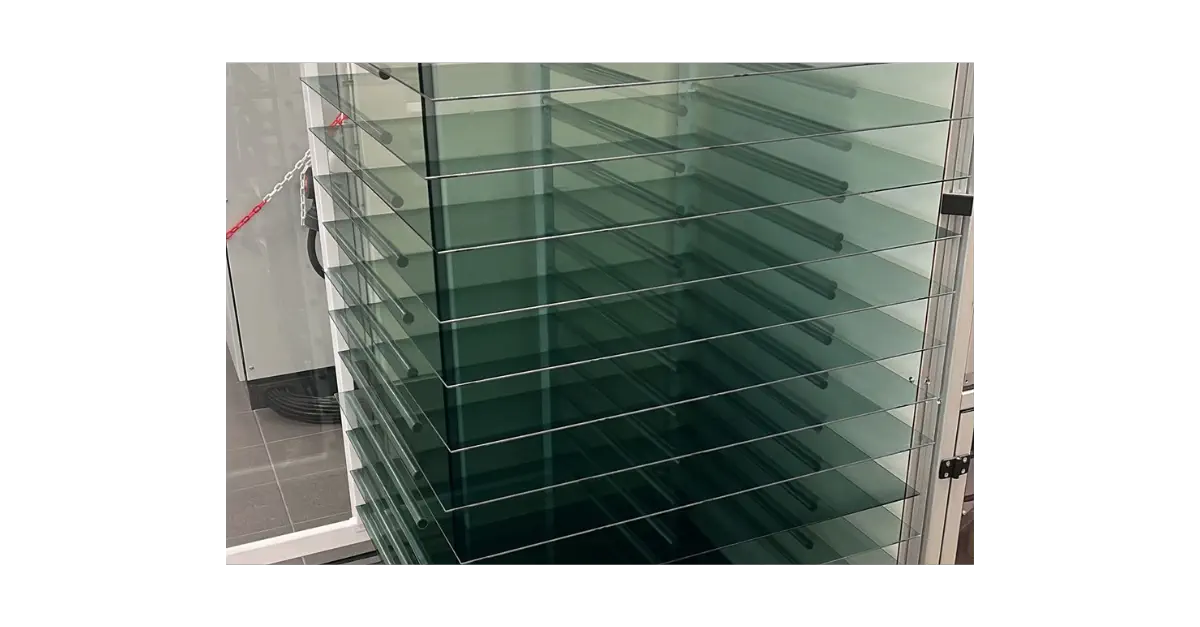
The smart windows are equipped with a thermochromic pigment that becomes transparent to infrared radiation at low temperatures (left figure), allowing solar heat to pass through. At high temperatures (right figure), the pigment blocks infrared radiation through a structural change, which in turn reduces heat transfer.
A greener, sustainable world
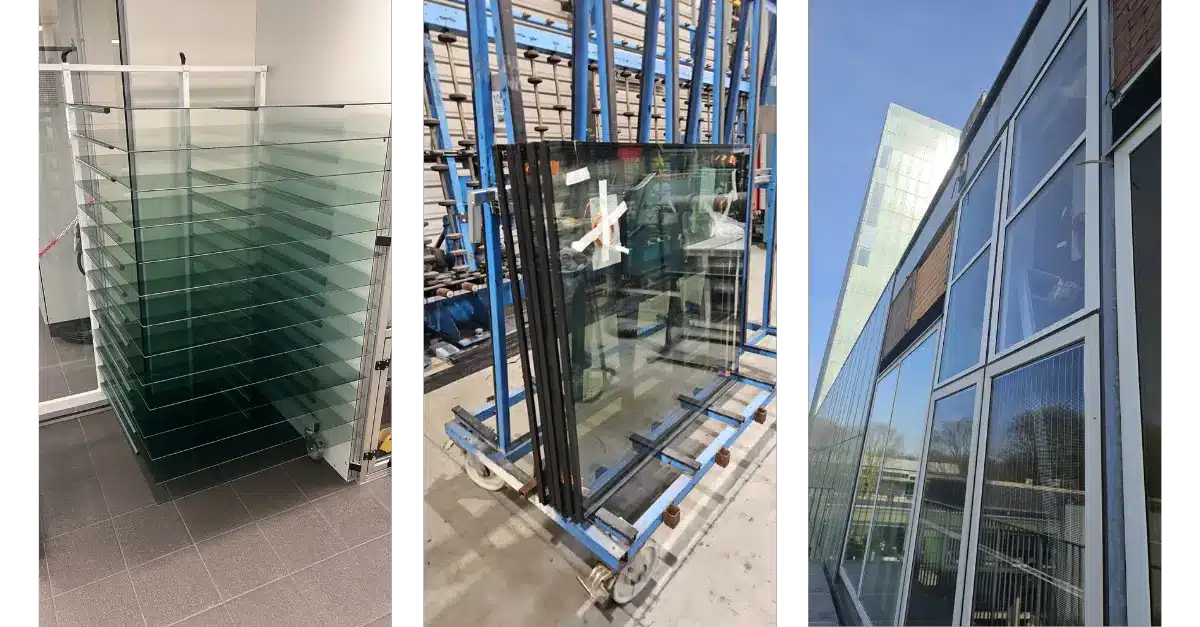
The smart glazing will be installed and tested in office buildings at the Brightlands Chemelot Campus in Geleen, the Netherlands. Research will also be conducted there into the social acceptance of the glass and the impact of this innovative technology on health and the indoor climate.
“By developing smart window technology that adapts to seasonal changes, we aim not only to reduce CO2 emissions but also to create a healthier and more comfortable indoor climate. In this way, we are working together towards a greener and more sustainable world,” say the researchers.
Enormous gains to be made
U-SAVE is an Interreg Flanders-Netherlands project supported by European, regional, and provincial funding. Tom Vandeput, Limburg Deputy for Economy: “The cheapest and cleanest energy is the energy we do not consume. Energy consumption must be significantly reduced, especially in industry and in our buildings. Since windows are responsible for 30 to 40% of total energy consumption and 60% of the cooling demand in buildings, there are still enormous gains to be made. U-SAVE helps us take an important step in this direction with smart glazing that simultaneously saves energy, increases comfort, and offers our manufacturing and construction companies new growth opportunities. In this way, we link sustainability directly to economic progress. This is innovation that propels us all forward.”
Partners
Within U-SAVE, UHasselt and imec collaborate through the Institute for Materials Research, imo-imomec (BE), on the development of thermochromic material. In collaboration with TNO (NL), imo-imomec focuses on both design and evaluation. Material properties are analyzed in detail using advanced techniques. AGFA (BE) supports the scaling up of the production process. Group Ceyssens (BE) and Helwig (NL) will assemble the smart window with its frame, and Group Ceyssens (BE) will integrate the smart windows into test buildings and office buildings together with Brightlands Chemelot Campus (NL) and TNO (NL). Research into social acceptance and the impact on health and the indoor climate is being conducted by Zuyd University of Applied Sciences (NL) and Maastricht University (NL).
With the financial support of:
Keep discovering
Would you like to stay informed about our latest projects and innovations? Subscribe to our newsletter now to discover what is next.